Mirrai Careers
Cover Letter for Project Manager: What Hiring Managers Look For (2026)
2.3M PMP-related openings globally in 2026 and 73% of hiring managers spot copy-paste cover letters instantly. The PM letter is a 300-word audit of your structure, scope-framing, and communication. Template plus the five things hiring managers actually score.

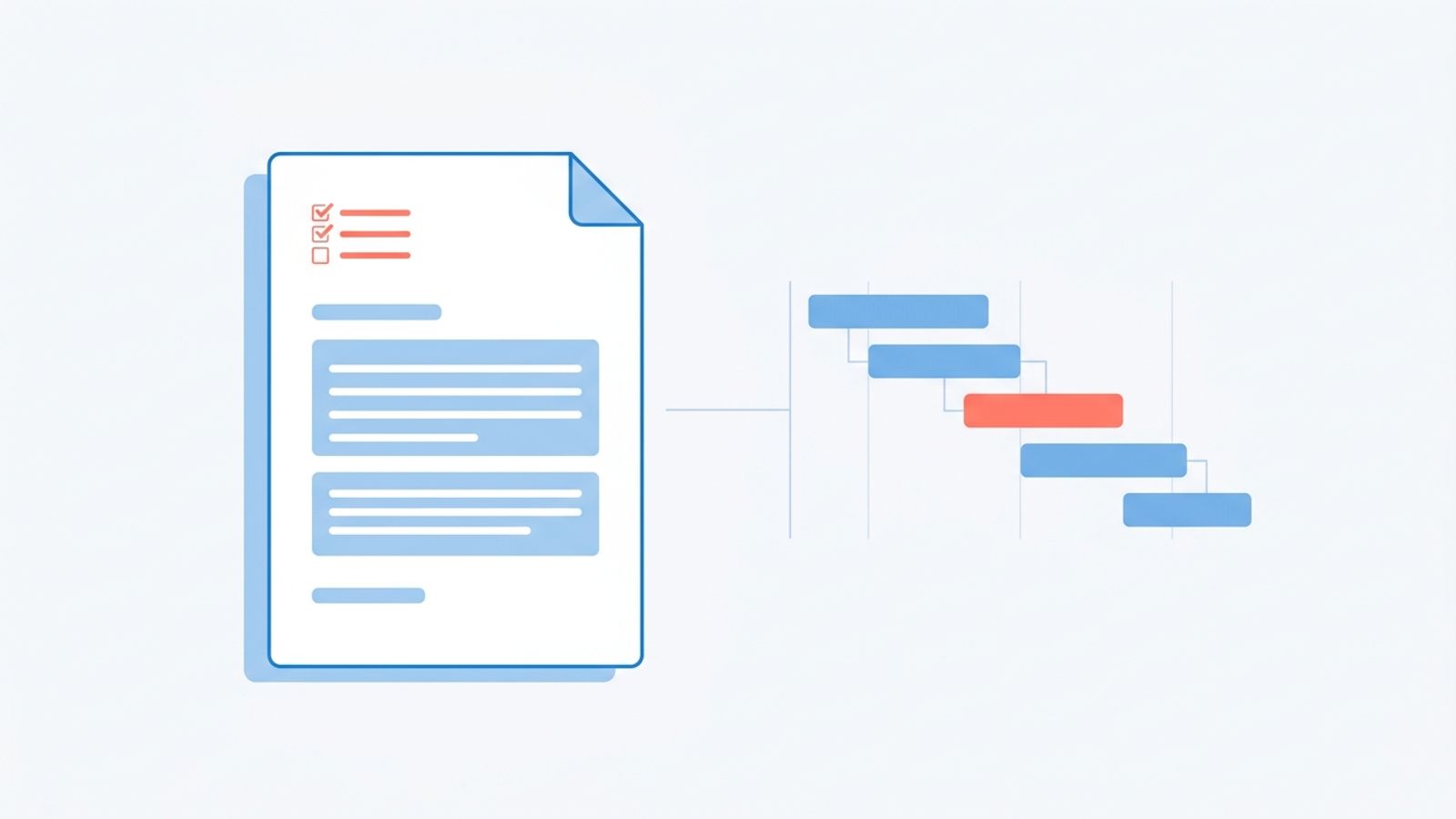
A project manager cover letter is read more often than most. Unlike software engineering, where portfolio and GitHub do most of the work, project management is judged on communication, structure, and how you frame scope under constraint. The cover letter is the first small project your hiring manager sees you run.
The PM job market is hot in 2026: PMI estimates 2.3 million PMP-related openings globally and a 30-million project-professional shortfall by 2035. Glassdoor's 2025 data puts median PM total pay at $136K (range $104-183K), with PMP-certified PMs earning roughly 20% more than non-certified peers. The demand is real. The screening is also real: 73% of hiring managers say they spot a copy-paste cover letter on first read, and 76% auto-reject for typos (Resume Genius 2025, The Muse).
Below: the five things hiring managers actually score, an annotated template, variations by experience and industry, and the mistakes that kill PM applications before page two.
Mirrai Careers
Match your resume to any job in seconds
Upload your resume, paste a job description, see your match score.
Try FreeFree month of Pro with code LAUNCH
Does a Project Manager Cover Letter Still Matter?
More than for most roles. Three reasons:
- PM is a communication role. If the letter is poorly structured, ambiguous, or padded, the hiring manager treats it as a sample of how you would write a status update or a steering-committee email. The letter is being graded on structure, not just content.
- Most PM jobs require stakeholder management. The cover letter is your first stakeholder interaction with the company. Specificity to the role, the team, and the company's situation reads as the same instinct that produces good kickoff agendas.
- PM applications are crowded. The talent pool grew significantly post-2022 as bootcamps and pivot programs sent thousands of new PMs into the market. A specific, well-structured cover letter is the cheapest way to differentiate.
In the small number of cases where the cover letter is genuinely optional (LinkedIn Easy Apply, mass-application portals at large companies), still include one for any role you actually want. For high-volume cold applications to FAANG, skip it and focus on the resume.
What PM Hiring Managers Actually Score
Five things, in roughly the order they matter:
- Quantified outcomes. Saying you "led a project" tells the reader nothing. "Delivered a 14-month $4.2M ERP migration across 6 business units, finishing 3 weeks early and under budget by $180K" is the entire game. Numbers, scope, scale, dollars, dates, team size. If a sentence in your letter could apply to any PM in your industry, it is dead weight.
- Scope and complexity. Hiring managers want to know what kind of projects you have actually run, not just titles you have held. Cross-functional headcount, vendor count, geographies, stakeholder seniority, regulatory constraints. The PM scope vocabulary is "I owned X across Y," not "I was responsible for Z."
- Methodology fit. Mention Agile, Scrum, SAFe, Waterfall, Kanban, or the company's specific methodology if you know it. Match the JD: a Waterfall company will read "Certified Scrum Master with 7 years of Agile delivery" as a flag, not a credential. Generic "Agile experience" is filler; "Ran 3 concurrent SAFe ARTs across 60 engineers" is information.
- Industry and tool fluency. PMs in healthcare need HIPAA and EHR awareness. Construction needs CPM scheduling and OSHA. IT needs ITIL and the relevant stack. Tools: Jira, Asana, MS Project, Smartsheet, Monday, ClickUp, Confluence. Naming the relevant tools without padding the list is what reads as fluent.
- Communication and conflict signal. One or two sentences about a stakeholder, escalation, or save situation where you owned the communication. Hiring managers know that 60% of PM work is unblocking and translating; they want evidence you can do both.
The Project Manager Cover Letter Template
300-350 words. Three paragraphs. Five elements:
Annotated template (replace bracketed items, keep the structure)
Dear [Hiring Manager name if findable, otherwise "[Company] Hiring Team"], I am applying for the [exact role title] position at [Company]. Your [specific reference: recent product launch, the 2025 expansion into EMEA, the public commitment to X] aligns with my experience leading [type of program] in [your industry/domain]. In my current role at [Company], I [primary outcome with numbers]. The most recent example: [one specific project covering scope, budget, timeline, team size, and outcome with metric]. I worked with [stakeholder mix: engineering, vendors, regulatory, finance] using [methodology: Scrum/SAFe/Waterfall/hybrid] and [tool stack: Jira, Smartsheet, etc.]. [Optional second proof paragraph if you have a strong second case. Keep it to 3 sentences max.] What draws me to [Company] specifically is [specific reference: a team or leader, an open initiative, a stated company priority that matches your strength]. The opportunity to bring [your differentiator] to [their challenge] is the reason I am writing rather than applying through a portal. I am available starting [date] and would value a 30-minute call to walk through [specific aspect of the JD]. My resume is attached, with the [specific most relevant project] on page one. Thanks for your time, [Your name] [Phone] | [Email] | [LinkedIn URL]
That is the template. The annotated parts are what a hiring manager spends 30 seconds on; the rest is scanned. Anything that does not match one of the five scoring criteria above can be cut.
Variations by Experience Level
Entry-level PM (0-2 years, often pivoter)
Lead with the strongest non-PM project you owned in your previous role: implementations, rollouts, cross-team work, internal initiatives. Most entry-level PMs come from operations, business analysis, engineering, or consulting. The hiring manager wants to see that you have already done PM work under a different title. One or two sentences on the cert if you have it (CAPM, PSM I, Google PM), but the cert is not the lede.
Mid-level (3-7 years)
Lead with program-level outcomes: multi-project portfolios, budgets in the $1-10M range, cross-functional headcount over 15-20. This is the level where vague "managed projects" framing gets penalized hardest because the hiring manager expects scope precision. Name the methodologies and the tooling stack in one tight sentence.
Senior / Program Manager / PMO (8+ years)
Lead with strategic outcomes: launched a PMO from zero, delivered a $50M+ program, owned the methodology shift across an org. At this level the letter shifts from "I delivered" to "I built the system that delivered." Mention the team you built or led (size, hires, retention), the framework you implemented, and the business outcome at the company-strategy level.
Pivoter from a parallel field (consulting, ops, engineering, teaching)
Lead with the bridge project that proves PM mindset. Mention prior role in one sentence as context, then spend the rest of the letter on the structured-delivery work you did under that title. The cert (CAPM, PSM I, Google PM, PMP if eligible) goes in the closing sentence as the evidence that you have done the formal foundation, not as the headline.
Industry-Specific Tweaks
- IT / Software: ITIL, change management, release management, CAB processes, on-call rotations, incident management. Cite specific stack experience (cloud platforms, DevOps tools) without padding the list.
- Construction: CPM scheduling, OSHA compliance, RFI/CO/submittal volumes, GMP/lump-sum/cost-plus contract types, LEED certification if relevant. Sum up the largest build in $/sq-ft and headcount.
- Healthcare: HIPAA, Joint Commission/CMS deadlines, Epic/Cerner implementation experience, clinical-stakeholder management. Healthcare PMs are scarce and well-paid; match the vocabulary precisely.
- Marketing / Creative: Campaign budget owned, channels coordinated, agency-vendor management, Adobe Workfront or Asana for creative ops. Lead with launch outcomes (revenue, lead lift, reach).
- Government / Defense: Cleared status if applicable (Secret, TS/SCI) goes in line 1, FAR / DFARS familiarity, CMMC awareness, milestone-based contract structures. Cycle times are longer; do not let the letter sound like a private-sector pace.
Match the vocabulary of the industry, but the underlying structure of the letter stays identical. Hiring managers in a vertical can tell within two sentences whether the writer has been in their world or has copied keywords from the JD.
Common Cover Letter Mistakes for PMs
- Typos. 76% of HR pros auto-reject for typos in the cover letter (Resume Genius 2025). For a role explicitly about attention to detail, this kills the application before page two.
- Wrong company name from a copy-paste. 73% of hiring managers say they spot copy-paste cover letters on first read (The Muse). Search-and-replace before saving.
- Restating the resume bullet-by-bullet. The letter is for context the resume cannot provide: scope framing, stakeholder navigation, the one specific case that proves your style.
- Vague claims with no numbers. "Successfully managed multiple complex projects" tells the reader nothing. Quantify scope, budget, timeline, team size, outcome. Without numbers, the letter reads as marketing copy.
- Burying methodology or industry tool experience in the closing. If the JD names Scrum, Smartsheet, ServiceNow, or Workfront and you have used them, those words belong in the second paragraph, not the last line.
- Pasting a ChatGPT default. 2026 hiring managers see hundreds of these per quarter and the patterns are recognizable: stacked em-dashes, "Not X — Y" sentence templates, generic claims with no specific company reference. Draft with AI if you want, but rewrite every sentence to add specifics.
- Using the cover letter to apologize for a gap or a pivot in detail. One sentence is enough. The rest of the letter should be about value, not justification.
A Note on AI and the PM Cover Letter
22% of PMs already use AI tools at work and another 39% expect to within 12 months (WEF Future of Jobs 2025). Hiring managers know this. Mentioning AI fluency in your cover letter is now table stakes for many PM roles, especially in tech and operations. One line is enough: "Built an AI-assisted intake-triage workflow that cut requirements gathering by 35% across 4 product teams." Quantified, specific, and shows you are using AI as a tool rather than as a buzzword.
The opposite mistake: letting the AI write the whole letter and submitting the default output. Hiring managers can flag a ChatGPT-default cover letter in under 30 seconds (stacked em-dashes, generic claims, "Not just X but Y" sentence patterns). The 1.9x interview lift from a tailored cover letter (Resume.io 2025) disappears when the letter is obviously machine-generated.
A middle path: Mirrai's Cover Letter Generator drafts a STAR-framework letter from your tailored resume variant and the JD, then gives you the editable draft to layer your voice and specifics on top. Free to try.
Before you leave
See how your resume stacks up
Paste any job description and get your match score in 30 seconds.
Try FreeFree month of Pro with code LAUNCH
FAQ
Is a cover letter required for project manager applications in 2026?
How long should a project manager cover letter be?
Do I need to mention my PMP certification in the cover letter?
How do I write a PM cover letter without much PM experience?
What should I do if I do not know the hiring manager's name?
A PM cover letter is a 300-word demo of your structure, scope-framing, and communication. The strength is in the specificity: numbers, scope, methodology, and one or two real projects. Mirrai's Cover Letter Generator produces a STAR-framework first draft from your resume and any JD, and Mirrai's Job Matcher shows which JD keywords are still missing before you submit. Free to try.