Mirrai Careers
Cover Letter Examples: 8 Real Samples by Job Type (2026)
8 fully-written cover letter examples across career stages and industries. Tailored cover letters get 53% more callbacks than no letter at all (2020 field experiment).


Tailored cover letters generate 53% more callbacks than applications without one, and 31% more than generic letters (Kessler et al., 2020 field experiment with 9,000 applications). The catch: only 26% of hiring managers always or frequently read them (ResumeBuilder, 2024 survey of 948 US hiring managers). Most spend under 30 seconds skimming the first 2-3 sentences. Write for that 30 seconds, not for the full page.
Below are 8 real, fully-written cover letter examples across the situations job seekers ask about most: mid-career switch, career changer, new grad, internal promotion, remote role, senior leadership, return after a gap, and cold outreach. Each one is annotated with what is working and why.
These are filled-in samples, not blank templates. For blank fillable templates with [brackets], the separate guide on how to write a cover letter has 8 of those plus the structural formula.
Mirrai Careers
Match your resume to any job in seconds
Upload your resume, paste a job description, see your match score.
Try FreeFree month of Pro with code LAUNCH
What Makes a Cover Letter Example Worth Copying
Before the samples, the four signals that separate a good cover letter example from filler:
- Specific company reference in the first 2 sentences (not "your company" or "your organization")
- One concrete achievement with a number in the first body paragraph
- A reason the candidate is right for THIS role, not any role
- A low-friction closing (one specific call to action, no groveling, no demands)
Each example below hits all four. If you are pulling from another source online and the letter does not hit them, do not copy it.
8 Cover Letter Examples by Situation
1. Mid-Career Marketing Manager Applying to a Fintech Scaleup
Situation: 6 years in B2B SaaS marketing, applying to a senior marketing role at a fintech scaleup.
Example: Sarah Chen applying to Stripe (Senior Marketing Manager)
Dear Mariko, Your rollout of Stripe Atlas into 12 new countries last quarter was the reason I started watching for an opening on your team. As a Senior Marketing Manager at HubSpot for the past 4 years, I built and shipped the GTM playbook for our APAC expansion, growing pipeline 38% in 9 months on a flat budget. I am applying for the Senior Marketing Manager role because the work you described (cross-border GTM, partner channel activation, data-driven channel mix) is the work I have been doing. At HubSpot I co-led the partner channel rebuild that took 14% of pipeline to 31% in 18 months. I would bring the same playbook into Stripe's expansion into the next wave of markets. I would welcome 20 minutes to discuss how the partner-led GTM thesis maps to Stripe's roadmap. I am available at [email protected] or +1 555 0192. Best, Sarah Chen
What is working: opens with a specific company event (Atlas country rollout), names one real number from her past role (38% pipeline growth) in the second sentence, ties her experience to the JD's exact phrasing in the third paragraph, and asks for 20 minutes (not the job, just a conversation). Total: 167 words. Under one screen.
2. Career Changer (Teaching to UX Research)
Situation: 8 years as a high school English teacher, transitioning to UX research at a SaaS company.
Example: Marcus Reyes applying to Notion (UX Researcher)
Dear Priya, I taught high school English for 8 years and I am moving deliberately into UX research. The User Research role at Notion is where I am applying because your team's published methodology (longitudinal diary studies, in-app moments interviews) is the closest match I have found to how I already think about learners. The move is not a guess. Over the past 14 months I completed the Google UX Design Certificate, ran two paid contracts (a 200-participant diary study for a productivity startup and a usability audit for a small fintech), and shipped the findings into product changes that the founders implemented. I am happy to share both reports. The transferable core: 8 years of writing rubrics, analyzing student work qualitatively, and turning patterns into curriculum changes. Different domain, same craft. I would welcome a 20-minute call to walk through one of the studies. Reach me at [email protected]. Best, Marcus Reyes
What is working: names the pivot in the first sentence (no dancing around it), points to specific Notion methodology to show research was done, gives concrete proof of preparation (cert + 2 paid contracts + reports available), then explicitly ties teaching skills to the target role. Honest about being a career changer, not apologetic.
A full guide for career changer cover letters is at cover letter for career change.
3. New Grad / No Experience (Software Engineer)
Situation: CS senior with internship experience and personal projects, applying for an entry-level role.
Example: Priya Patel applying to Linear (Software Engineer, New Grad)
Dear Karim, I am applying for the New Grad Software Engineer position at Linear. I have been a daily Linear user for 18 months and the reason I am writing today is the way your engineering team approaches API design (the recent post on idempotency keys was the clearest version of the problem I have read). I am graduating in May 2026 from Carnegie Mellon with a B.S. in Computer Science. Most relevant to this role: I built and shipped a TypeScript SDK for a small open-source project (412 GitHub stars, used by 3 companies in production). Last summer I interned at Asana on the Workflows team, where I shipped a refactor of the rules engine that cut p95 latency on rule evaluation from 240ms to 90ms. I know how Linear ships and I want to help you keep shipping that way. I would welcome the chance to talk through the technical interview process. Reach me at [email protected]. Best, Priya Patel
What is working: opens with proof of being an actual user of the product (18 months) and a specific engineering decision she noticed, then leads with concrete numbers (412 stars, p95 latency drop) instead of leading with the degree. No "I am eager to learn" filler. The proof of learning is in the projects.
4. Senior / Director-Level (Engineering Leadership)
Situation: VP of Engineering at a startup, moving to a Director of Platform role at a larger company.
Example: Jordan Kim applying to Vercel (Director of Platform Engineering)
Dear Lee, I led the platform team at Sentry through the migration that took ingest from 2B to 14B events per day without an outage. Vercel is at the inflection where I think my last three years map most cleanly. The Director of Platform Engineering role is what I am applying for. The scope I have owned: 22 engineers across 4 squads, $4.1M annual infra budget, on-call rotation for the data pipeline that runs the company's revenue model. We cut infra spend 31% in 2024 while doubling ingest volume, primarily through the move off self-hosted Kafka onto a managed event bus. What I am drawn to at Vercel: the build platform problem (multi-tenant isolation at scale, framework agnosticism, sub-second cold starts) is where I want to spend the next 4 years. I would welcome a conversation. Reach me at [email protected]. Best, Jordan Kim
What is working: leads with the most senior accomplishment (2B to 14B events) as the opening hook, then quantifies scope precisely (people, budget, infra savings). The "what I am drawn to" paragraph picks a specific technical thesis (build platform at scale) rather than generic enthusiasm. Director-level letters need to demonstrate strategic thinking, not just execution.
5. Remote-First Role (Distributed Senior Engineer)
Situation: Senior engineer with 5 years of remote-only experience, applying to a fully distributed company.
Example: Alex Whitfield applying to GitLab (Senior Backend Engineer)
Dear Yuki, I have been a fully remote backend engineer for 5 years and the Senior Backend Engineer role at GitLab is where I want to do the next 4. Your handbook-first culture and async-by-default workflow is the environment where I produce my best work, not an environment I am asking to be allowed into. Most recent ship: at Buffer (also fully remote, 75 people across 24 timezones) I owned the rebuild of the scheduling service, moving from a single-region Postgres setup to a multi-region active-active design. p99 latency for posting actions dropped from 1.4s to 280ms. I wrote the full RFC, ran the architecture review async, and shipped over 11 weeks without a synchronous standup. I know how to work in writing. I know how to push decisions through async docs rather than waiting for a meeting. And I know that the right remote teammate is not just disciplined, but generative in writing. I would welcome a conversation. Reach me at [email protected]. Best, Alex Whitfield
What is working: explicitly frames remote work as a competency, not a perk. The phrase "an environment I am asking to be allowed into" reframes the dynamic. Concrete remote-specific proof points (timezone count, async RFC, no standup) close the loop. Reads as someone who understands what fully-distributed companies actually evaluate.
6. Returning After a Gap (Parental Leave)
Situation: Marketing manager returning after a 14-month parental leave, applying for an equivalent role.
Example: Diana Rivera applying to Figma (Senior Brand Marketing Manager)
Dear Aki, I am applying for the Senior Brand Marketing Manager role at Figma after a 14-month parental leave. The reason I am writing now is that the recent brand refresh you led around the Config conference is the exact kind of work I want to be doing. Before my leave I spent 6 years in brand and product marketing at Atlassian, most recently leading the rebrand of Jira Product Discovery (launched in 2023, generated 18% of new-product-line ARR by year end). I shipped 4 major campaign cycles, ran a team of 5, and partnered with PMM on every major roadmap launch. During the leave I stayed close to the field: I wrote 6 case-study deep-dives for a SaaS community blog and consulted part-time for two seed-stage startups on brand foundations. I would be ready to ramp inside 4 weeks. I would welcome a conversation. Reach me at [email protected]. Best, Diana Rivera
What is working: addresses the gap directly in the first sentence (no apologizing), leads with a specific recent accomplishment to anchor seniority, names what she did during the leave to show she was not dormant, and gives a concrete ramp commitment (4 weeks). Naming the gap up front is the only safe play; trying to hide it reads worse than owning it.
7. Internal Promotion (Analyst to Manager)
Situation: Senior data analyst at current company, applying for an Analytics Manager opening in a different team.
Example: Tom Nguyen, internal application (Analytics Manager)
Dear Sasha, I am writing about the Analytics Manager opening on the Growth team. I have been a Senior Data Analyst at the company for 3 years, currently embedded with Lifecycle Marketing. The specific reason I am the right internal candidate: the work you are hiring for (causal inference on user activation, instrumentation governance, building out a junior team) overlaps with what I already do informally. Over the past year I mentored 2 junior analysts who both got promoted, I wrote the team's event-tracking spec that Growth adopted, and I shipped the activation experiment platform that runs 8-12 tests per quarter. I have already spoken with Mehul on Growth, and I have a 90-day plan if I get the role. Hiring internally cuts ramp by an estimated 8 weeks vs. external (Bersin 2023 study); I am ready to make that pay off. I would welcome a conversation. I am at [email protected]. Best, Tom Nguyen
What is working: draws on internal knowledge specifically (already mentored junior analysts, already wrote the spec, already talked to the hiring partner). The 90-day plan line shows initiative without overclaiming. The Bersin stat about internal hire ramp is the kind of detail that signals strategic thinking. Internal applications win when they show "I am already doing the next role unofficially."
A general guide for cover letter structure (formula, opening lines, closings) is at how to write a cover letter.
8. Cold Outreach (No Job Posting)
Situation: Brand strategist reaching out to a small DTC startup that has no open postings.
Example: Emma Larsson, cold outreach to founding team
Subject: Brand foundations for Cohort — 15 min? Dear Ravi, I am writing because I just used Cohort for the third time this month, and the brand experience around the product is the gap I think I can help with. There is no posting for this. I am reaching out anyway. My background: 7 years in brand and content for early-stage DTC and SaaS. Most recently at Maple I rebuilt brand foundations and launched the voice system that took blog conversion from 1.2% to 3.9% in 6 months. Before that I was the second marketing hire at a Series A skincare brand (acquired in 2024). What I noticed using Cohort: the product story is sharp; the brand voice across email, blog, and onboarding does not yet match it. If there is a fit, I would love to talk through what a brand foundations sprint could look like (whether as a hire or a 4-week contract). I am not asking for a commitment. Just 15 minutes. Reach me at [email protected]. Best, Emma Larsson
What is working: subject line is the ask, not a vague pitch. Opens with proof of being a real user (third time this month) and a specific observation (brand voice gap) rather than a generic outreach line. Offers two engagement models (hire or contract) to lower the friction. The "I am not asking for a commitment, just 15 minutes" is the standard cold-outreach close that actually works because it inverts the usual ask.
How to Tailor Any Example to Your Job
Five steps to take a generic example above and turn it into your version, in roughly 25 minutes per letter:
- Replace the company-specific opening reference. Spend 5 minutes on the target company's blog, news page, or recent product launches. Pick one specific thing to reference in the first 2 sentences.
- Swap the achievement numbers with your real ones. Every example above has 1-2 specific numbers in the body. Use yours. If you do not have numbers yet, use scope (team size, budget, geography) or comparisons (before vs after).
- Match the JD's exact language for the role-fit paragraph. If the posting says "cross-functional partnerships," do not write "cross-team work." Mirror the exact phrasing twice in your letter.
- Replace the "what I am drawn to" line with a specific reason. Pick one thing about THIS company at THIS time. "Your recent Series C and the engineering team's focus on multi-tenancy" beats "your innovative culture."
- Set the same low-friction closing: ask for 15-20 minutes, not the job. Give two ways to reach you. Sign with first and last name.
25 minutes per letter is the floor. Shorter than that and the personalization signal is missing, which is exactly what 78% of cover letters submitted in 2026 fail to provide (Originality.ai, 2026 hiring AI report).
To skip the 25-minute manual step, Mirrai's Cover Letter Generator takes your resume plus a job description and produces a tailored first draft. Edit for your specifics and ship.
Should You Use ChatGPT to Customize These Examples?
Yes for the structural editing pass; no for the personalization. 78% of job applications in 2026 contain AI-generated content (WasItAIGenerated, 2026 research). 80% of hiring managers view obviously AI-generated content negatively. 63% view AI-assisted letters favorably when customized with real specifics (Coverlettercopilot, 2026 recruiter data).
“I had over 100 applications. 35%+ of them had the exact same free ChatGPT answer to the two opinion questions. A small percentage copy-pasted the AI response of "I am AI and do not have thoughts and opinions." The only people we interviewed were the ones with relevant experience and who wrote a thoughtful answer.”
Practical 70/30 rule: let AI handle 70% (structure, transitions, basic phrasing). You handle 30% (specific company references, your real numbers, the "why this company"). The 30% is what makes the letter un-generic. Skip the 30% and the letter reads exactly like the 35% that DevoPast threw out.
Cover Letter Examples by Role and Industry
Role-specific cover letter guides with full examples for common situations:
- Software engineer: see the full guide and example
- Project manager: full guide with sample letters
- Teacher (or transitioning out of teaching): see the dedicated guide
- Nurse: full guide for healthcare specifics
- Career changer (any industry): extended examples and the transition framing
Software engineer cover letters: cover letter for software engineer.
Project manager cover letters: cover letter for project manager.
Teaching-to-corporate transition: cover letter for teacher.
Nurse cover letters: cover letter for nurse.
Career change cover letter playbook: cover letter for career change.
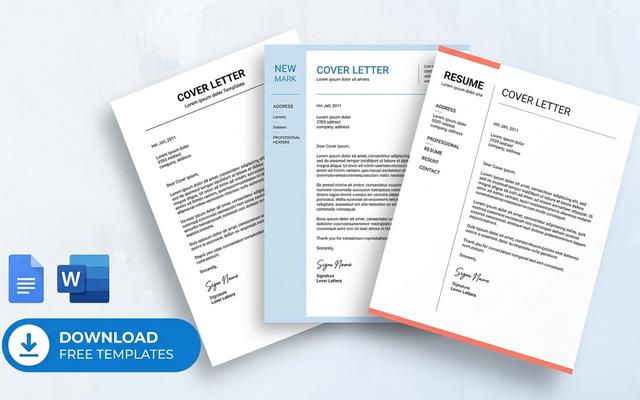
Blank fillable templates (for the structure formula): cover letter template free and how to write a cover letter.
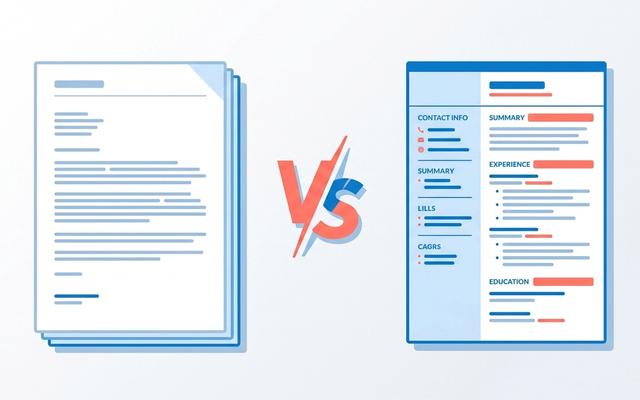
Confused about whether to write one at all? See cover letter vs resume for the decision framework.
Before you leave
See how your resume stacks up
Paste any job description and get your match score in 30 seconds.
Try FreeFree month of Pro with code LAUNCH
FAQ
How long should a cover letter example be when I copy it?
Can I copy these examples directly with my own name?
Should the cover letter examples I send be different per company?
Do hiring managers actually read cover letters in 2026?
What is the biggest mistake people make when copying cover letter examples?
Pair your cover letter with a JD-matched resume. Mirrai's Resume Builder tailors the bullet points to the specific job description, so both documents tell the same story in the language the recruiter is searching for.